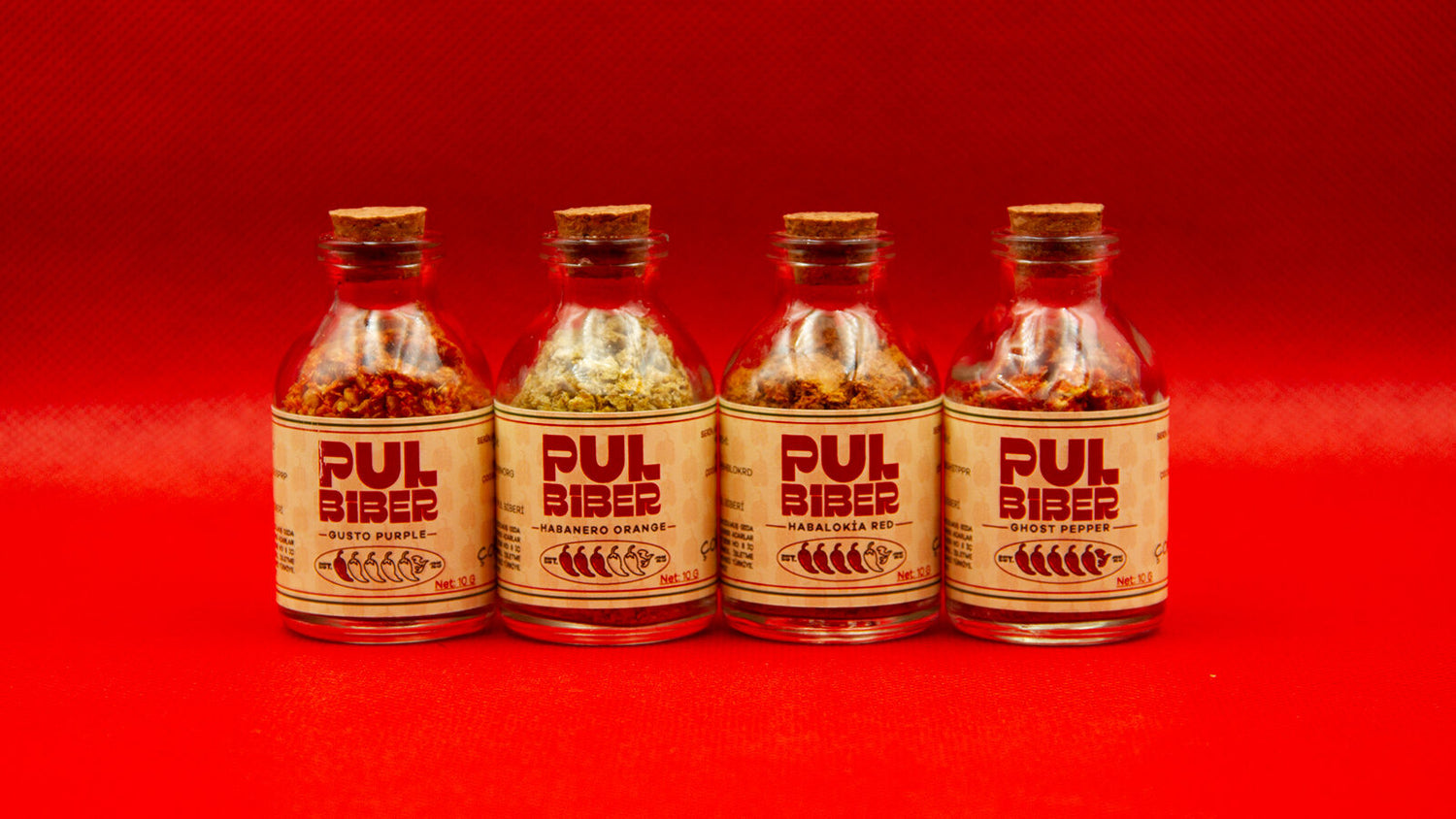
The best chili flakes are those that directly reflect the quality of the chili used, the care taken in the production process, and the character of the product. While mixed chili flakes on supermarket shelves offer a standard experience, single-origin chili flakes allow you to truly experience the unique aroma of that particular chili — whether fruity, smoky, chocolatey, or earthy — in every jar.
Chili flakes are one of the most fundamental ingredients in Turkish cuisine. They are found in almost every home and on every table, yet they are one of the least questioned products. Most of the time, they are bought off the supermarket shelf and used directly. However, there are much greater differences than commonly perceived among products sold under the name "pul biber" (chili flakes).
This difference is not only about the level of spiciness. The type of chili used, its growing region, harvest time, and the drying method applied directly determine the product's aroma, color, and intensity. Two different chili flakes in the same category can create entirely different sensory experiences.
In our greenhouse in Beykoz, Istanbul, we grow approximately 200 different hot pepper varieties, and we offer some of them as chili flakes. Each jar contains only one type of chili — no mixtures, no additives. In this article, we discuss the truly important criteria for choosing chili flakes and the difference between single-origin and mixed varieties.
Chili Flakes Are Not Actually a Single Product
Chili flakes, technically, are not a product but a processing method. They are obtained by crushing dried peppers. However, this definition is not sufficient to explain the true character of chili flakes. Because the main factor determining the product's identity is the chili itself.
A large portion of the chili peppers used in chili flake production in Turkey botanically belongs to the Capsicum annuum species. This species is a very broad group, including Cayenne pepper, Maraş-type red peppers, ornamental peppers, and many local variations. However, a significant part of the varieties within this broad group, even if called by different names, are actually variations of the same genetic basis.
For this reason, many chili flakes found in the Turkish market remain in a similar heat range, have similar red tones, and fit a similar aromatic profile. This situation creates a familiar and stable experience for the consumer — but also limits the potential diversity of chili flakes.

Why Are Chili Flakes Perceived as "Uniform" in Turkey?
The chili flake culture in Turkey is quite strong, but this culture is largely shaped around a specific flavor standard. In industrial production, the goal is often to deliver the same color, the same spiciness, and the same experience in every package.
For this reason, instead of major differences, small nuances are observed between chili flakes from different producers. The color might be slightly darker, the spiciness a bit higher, but the general character often remains the same.
However, on a global scale, the category we call chili flakes is much broader. More fruity profiles, varieties with dominant smoky aromas, peppers carrying notes of cocoa, coffee, or dried fruit — many different aromatic worlds are possible. For example, some peppers like Mulato can offer aromas similar to cocoa, coffee, and dried plums, very different from the classic "spicy" profile.
This shows that chili flakes are not just a "source of heat," but a serious aromatic component.
What is Single Origin Chili Flakes?

Single-origin chili flakes are produced from only one type of chili. They contain no other peppers. This approach has become more prominent in recent years, especially in boutique production and the specialty food category.
The goal is simple: to reflect the chili's own character as is.
You can clearly see this approach in our chili flakes collection. Chili flakes made from 100% Cayenne Pepper offer a balanced, sharp, and clear heat; while Mulato Pepper offers high aromatic depth with low heat. What you consume in every jar is not just "spiciness," but the direct identity of that chili.
This approach is the same as "single origin" in coffee and "single estate" in olive oil. And once you taste this difference, your perspective on standard mixed chili flakes will change.
What are Mixed Chili Flakes?

Mixed chili flakes are created by combining multiple types of chili in specific proportions. A large portion of the products on the market in Turkey fall into this category.
But there's an important detail: "mixed" does not mean "low quality."
A well-made mix balances the heat, layers the aroma, and creates a more complex profile. For example, our Special Chili Mix brings together different character chilies such as Ghost Pepper, Trinidad Scorpion, Purple Cayenne, and Urfa pepper to create a layered structure. Such mixes, when prepared in the right proportions, can even offer a more complex experience than single-origin products.
Why is Spiciness Alone Not a Sufficient Criterion?
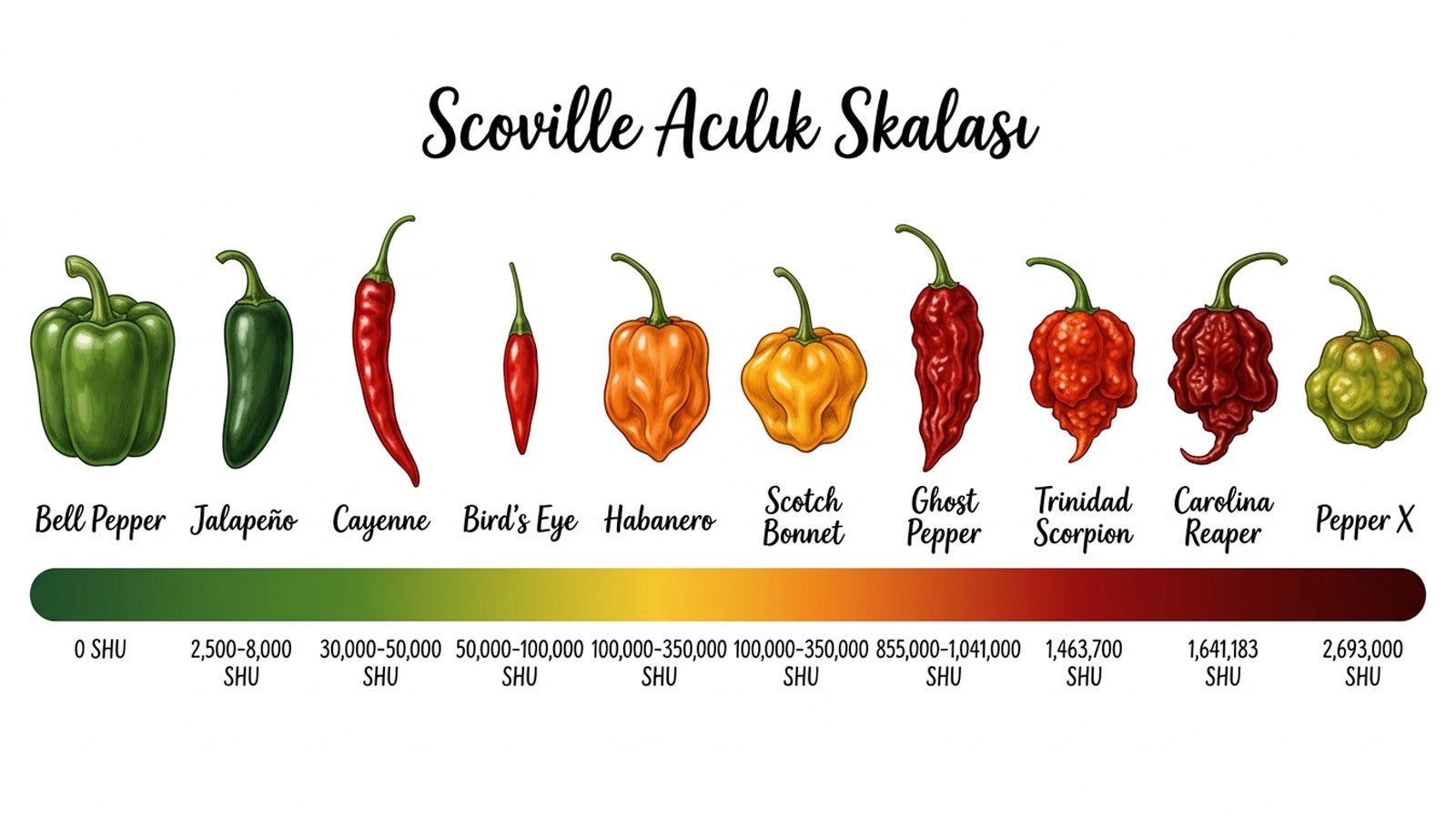
In Turkey, when hot peppers are mentioned, the first question is usually: "How spicy is it?" However, from a scientific perspective, spiciness is measured only by capsaicin content, and this is just one dimension of the experience. (The Scoville scale is used for this purpose.)
True quality, however, is determined by many different factors: the way the heat develops (sudden or slow?), the depth of the aroma, the lingering taste, and the flavor profile (fruity, earthy, smoky, etc.). So, a very spicy chili flake is not always a good chili flake.
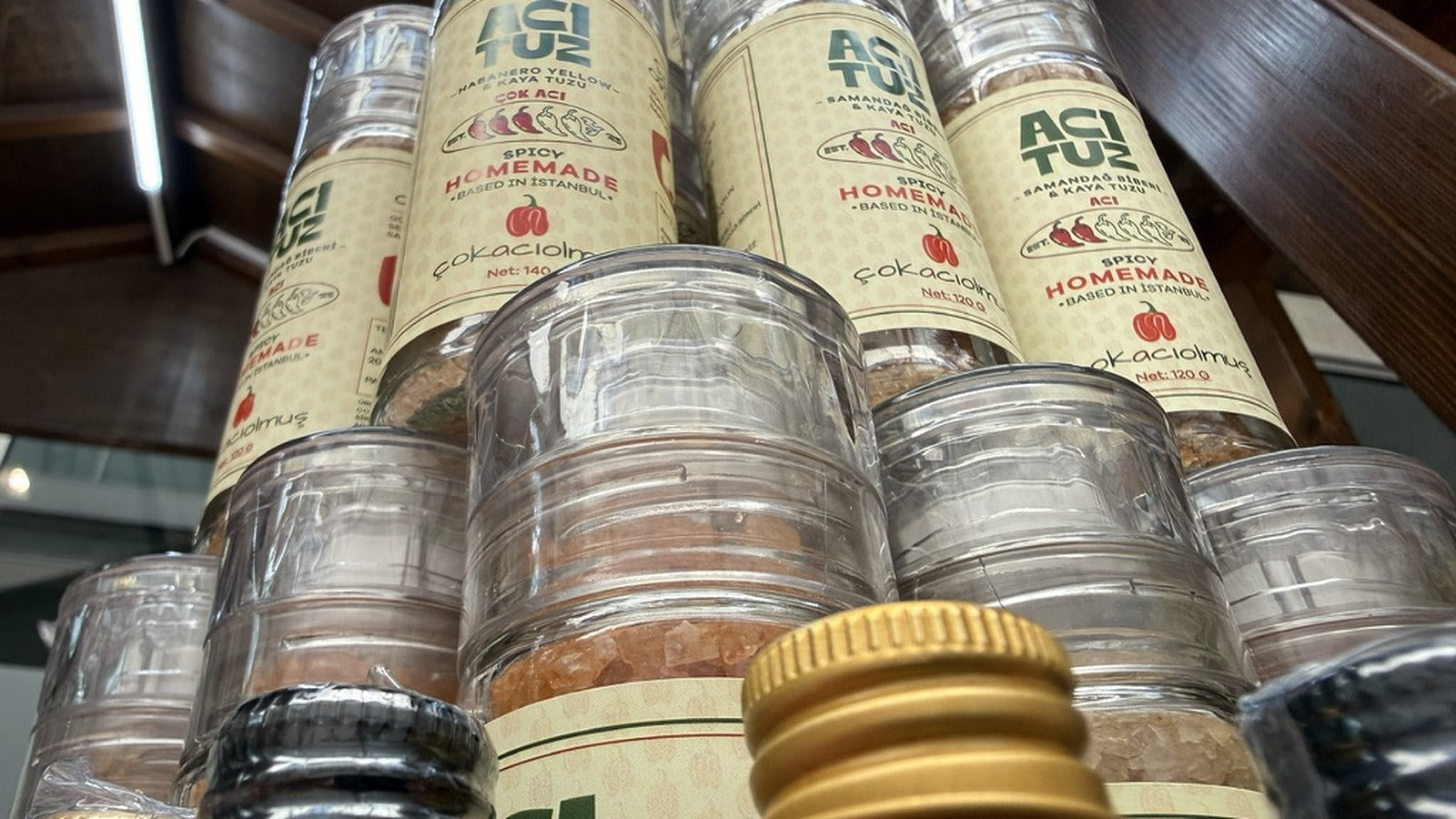
In our greenhouse, we grow peppers with different heat levels, from 30,000 SHU Cayenne to 1,400,000 SHU Trinidad Scorpion. Each has a different aroma and taste profile as well as a different level of heat. You can experience this diversity in our Chili Flakes and Hot Salt collections.
Choosing Good Chili Flakes Actually Starts with Knowing What You're Looking For
Choosing chili flakes is not a simple shopping decision. It's actually about what kind of experience you're looking for in the kitchen.
If you want a standard, balanced, and familiar taste, mixed chili flakes are a good choice. If you want to clearly feel the character of the chili and discover a different world in every jar, single-origin chili flakes will make you much happier.
But in every case, the only constant is this: quality chili flakes directly reflect the quality of the chili used, the care taken in the production process, and the character of the product. And this difference is understood at the first taste.
Frequently Asked Questions About Chili Flakes
Are single-origin chili flakes spicier?
Spiciness depends on the type of chili, not whether it's single-origin. While single-origin Mulato chili flakes are very mildly spicy, single-origin Ghost Pepper chili flakes are extremely spicy. The meaning of single-origin is that you get the pure aroma of that chili in every jar.
Are mixed chili flakes bad?
No. A well-made mix can offer a more complex experience than a single-origin variety. The important thing is that the mix is prepared with conscious preference and the quality of the chilies within it.
How should chili flakes be stored?
Store in a cool, dark place in an airtight glass jar. Keep away from direct sunlight. This way, it preserves its aroma and color for a long time.
How long do chili flakes last?
Under proper storage conditions, they retain their aroma and spiciness for 12-18 months. Their color and aroma may diminish over time, but they will not spoil.
Which chili flakes suit which dishes?
Cayenne chili flakes are ideal for daily use — eggs, soups, meat, and pasta. Ghost Pepper chili flakes are used in very small amounts where strong spiciness is desired. Mulato chili flakes, on the other hand, give excellent results in recipes where aroma is desired more than heat — especially in sauces and marinades.
This article was prepared by the çokacıolmuş team, which grows over 200 varieties of hot peppers in their greenhouse in Beykoz, Istanbul. To discover our chili flakes collection, click here, and for more information about the world of hot peppers, you can check out our articles The 10 Hottest Peppers in the World, What is Cayenne Pepper?, and What is the Scoville Scale?. For your questions, you can reach us on Instagram.

Leave a comment
This site is protected by hCaptcha and the hCaptcha Privacy Policy and Terms of Service apply.